



What people ask
Frequently Asked Questions
INS offers global coverage with 24/7 availability
What does a marine surveyor do?
A marine surveyor is a qualified specialist who examines vessels, yachts, cargo and maritime installations to assess their condition, safety, value and regulatory standing. Acting impartially, the surveyor prepares detailed reports for buyers, sellers, insurers and solicitors. Their expertise covers hull construction, machinery, onboard systems, certification and statutory requirements. The aim is to protect assets, enhance safety and provide clear technical evidence where questions or disputes arise.
What happens during a pre-purchase survey?
A pre-purchase survey is a thorough inspection arranged before committing to the purchase of a ship; floating object or yacht. The hull, superstructure, engines, electrical systems, safety equipment and paperwork are reviewed. Any defects are identified, overall condition is assessed and likely repair costs can be indicated, together with an opinion of current market worth. A full written report is supplied to assist with negotiations or to inform a decision on whether to proceed. Those reports are suitable for insurers and financial purposes if required.
How long does a survey usually last?
The duration varies according to the vessel’s size, design and the level of inspection required. A standard yacht survey may take between half a day and a full day, while larger commercial craft can require several days. Sea trials, tank inspections or other additional checks will extend the timeframe. Cargo inspections may range from a few hours to multiple days depending on the nature of the goods and the operation. Estimated timescales are confirmed when booking. We recommend that the time window is large enough so that the full survey can be take place.
How do on-hire and off-hire surveys differ?
An on-hire survey records the vessel’s condition at the commencement of a charter. An off-hire survey documents its state upon return. Comparing the two reports provides objective evidence of any changes during the charter period, helping to determine responsibility for damage or deterioration. We also verify the correct quantity of bunkers and equipment on board before and after. Parties need o agree a final delivery time and place, if that is not possible to attend (E.O.S. upon arrival) then the surveyor shall adjust the calculations with the consumption.
Is a survey necessary for insurance purposes?
Insurers frequently require an up-to-date professional survey before issuing or renewing cover, particularly for older or high-value vessels. An insurance survey considers safety arrangements, maintenance standards and potential risk areas. This process benefits both the owner and the underwriter by identifying concerns before terms are agreed. Some policies also stipulate follow-up inspections at set intervals. A regular survey is also good for an Owners from a safety and responsibility point of view. Most insurance e policy does not cover lack of maintenance.
What is involved in a damage survey?
A damage survey examines deterioration arising from events such as collision, grounding or severe weather. The surveyor determines the probable cause, identifies affected structures or systems and evaluates the scope of remedial work. The resulting documentation supports insurance claims or legal proceedings, and attendance during repairs can be arranged to verify satisfactory completion.
A damage survey determines the history, the cause and eventual amount of damage. In certain surveys the surveyor expert shall assist in salvage of ship and/or cargo.
What does a cargo survey cover?
Cargo surveys verify the condition and quantity of goods at loading, during transit or at discharge. The inspection may include measuring weights or volumes, reviewing stowage methods and packaging, and noting any contamination or shortfall. Independent findings help shippers, consignees and insurers avoid or resolve disagreements.
What are non-marine surveys?
Non-marine surveys apply comparable inspection standards to land-based facilities. Warehouses, storage depots, pipelines and industrial sites can be assessed for structural integrity, operational suitability and compliance with safety requirements relating to cargo handling and storage.
Can you inspect cargo moved by road or rail or inland waterway?
Yes. Goods transported by lorry, rail or inland waterway can be examined for quantity, condition, packaging and securing arrangements. Comprehensive reporting provides reliable evidence if discrepancies or claims occur.
What is meant by a condition survey?
A condition survey offers a general evaluation of a vessel’s current state and upkeep. Owners often request this type of inspection ahead of insurance renewal, sale or extended cruising. The report details structural, mechanical and safety observations and may assist with maintenance planning.
Do you provide expert witness services?
Surveyors can act as independent experts in arbitration or court proceedings. This includes preparing technical reports and, where required, presenting evidence relating to vessel damage, cargo disputes or contractual matters.
What is the difference between expert surveyor, court survey, mediaton and arbitration?
An expert surveyor often works for ONE of the involved stakeholders (A or B or C or
insurers). His-her task is to assist in the defence of his mandatory.
Or the court can appoint an expert -surveyor who in this case only work to assist the
judge with technical information and knowledge. It remains only the judge that make the verdict and the consequences (although many time the expert conclusion are followed).
A mediator shall bring parties together, make an evaluation of facts and intense the parties
to FIND THEMSELVES A SOLUTION out of court action (or in between a court is action is placed “ON HOLD”. This process requires an agreement between parties and confidentiality is respected. In case of failure court action remain open.
An arbiter is often BEFORE AN OPERATION TAKE PLACE appointed that in case of
dispute the arbiter shall manage the case. An arbiter must be independent and cannot be involved before. He shall investigate the case and make his conclusion that are (often) binding for all parties. Therefore, it is important and best that parties nominate the arbiter before the start of the contract, although this is not always the case and it happen in arbitration that afterwards the nomination is made. This need all agree about the arbiter or he is instructed by a judge. A judgement of an arbiter is in most cases final and binding.
What is a counter survey?
A counter survey provides an independent reassessment when an earlier report is challenged. By conducting a fresh inspection and reviewing previous findings, the surveyor supports clients in negotiations or claim discussions. Many insurance policies include legal assistance, which then pays the costs for the counter-expertise.
Can you help resolve maritime disputes?
Technical expertise can be used to clarify the facts in contentious situations and to narrow differences between parties. Objective analysis often assists in achieving settlement without formal litigation. Read more about our Mediation services.
What types of safety survey are offered?
Safety inspections can be undertaken to confirm compliance with international conventions and local regulations and for safety matters in general.
Equipment as life-saving appliances, fire-fighting equipment, pollution prevention arrangements and navigational systems are examined to ensure lawful and safe operation.
Often a safety survey is required when transshipment take place for heavy or dangerous cargoes are handled. The safety surveyor is then preparing and following up the (cargo) operations.
Do you carry out maritime audits?
Audits of safety management systems, operational processes and regulatory compliance can be performed. Reports highlight deficiencies in documentation or practice and set out practical steps for improvement. A contract partner can ask for an audit but also companies have internal audits done by an external partner to improve the quality of the systems. This includes ISM, ISO 9001, ISO 14001 and ISO 45001.
What is a heavy lift survey?
A heavy lift survey assesses whether a vessel is suitably prepared to handle exceptionally large or heavy items. Structural strength, crane capacity, stability calculations and load distribution are reviewed to confirm that the proposed operation can be completed safely.
Also the lashing and securing shall be witness that this is made according the method statement / requirement or safe cargo transport.
A heavy list survey shall try to, avoid that damage happen or ascertain this damage upon arrival. It is common that beside the specialist from the shipping company and the handling terminal there an (independent) surveyor present is.
Are port and terminal inspections available?
Yes. Jetties, harbour installations, storage buildings and related infrastructure can be surveyed. Inspections consider structural soundness, safety compliance and operational efficiency, with documentation suitable for insurers or regulatory authorities.
A surveyor can also assist in the improvement of operation regarding safety, logistical flow and other technical systems assistance, time management, damage prevention, etc…
We offer an evaluation and audit and this can be made on a regular base.
Is marine survey training provided?
Training programmes are available for both new entrants and experienced practitioners. Subjects include inspection techniques, report preparation and understanding of relevant regulations, combining classroom learning with practical vessel & cargo assessments. A basic training is minimum 6 month to 2 years and a full experience take easily more then 2 years.
Can you act as skipper for a yacht?
Why are ultrasonic measurements and investigation made?
Ultrasonic waves are short and below what the human ear can detect. These are waves that are sent and received on instruments and giving us valuable information.
3 majors form of the use of ultrasonic testing are:
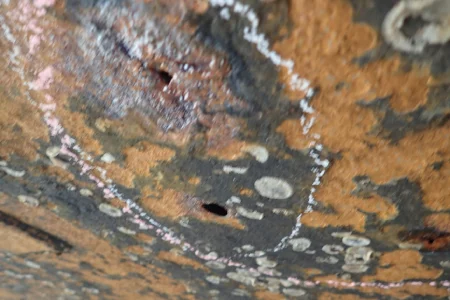
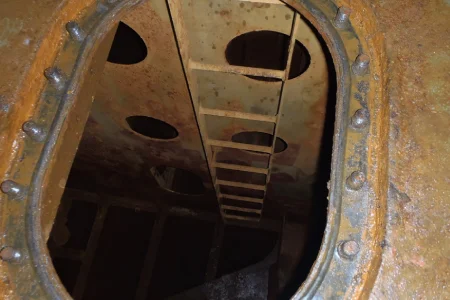
- With an instrument and probe we can measure the thickness of a commodity, often used for steel and less for aluminium on ships and yachts. This to defect failures and corrosion. Measurements are made for the hull plates, frames and watertight bulkheads, deck, ballast tanks and other tanks.
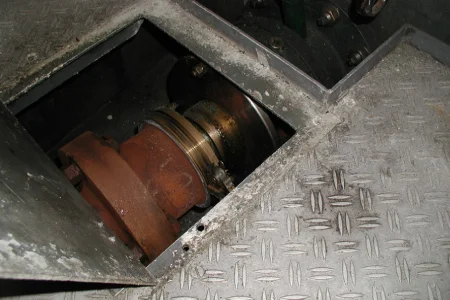
- Every movement of an axle or machinery or bearing create noise. Sometime we can hear this but often they are in the ultrasonic area and remain hidden without special equipment. Ultrasonic sounds are one of the tools and methods that are used to predict defect in an early stage and for general maintenance controls.
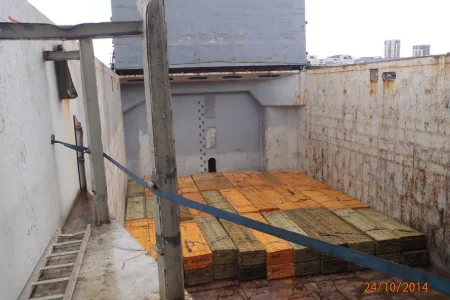
Ultrasonic can also be used for leak detection. This can be a cargo hold, a window or hatch or a tank. A sender is placed and sensitive equipment is used to detect if ultrasonic waves can get out of the space. This method allows to detect very small leaks than otherwise remain undetected.
How and why moisture measurements and osmose and delamination examinations are made?
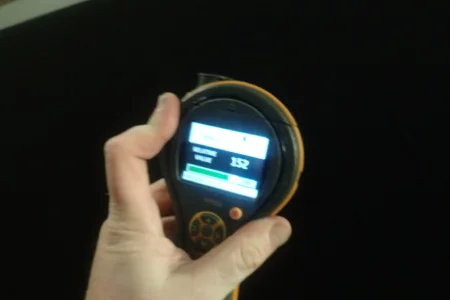
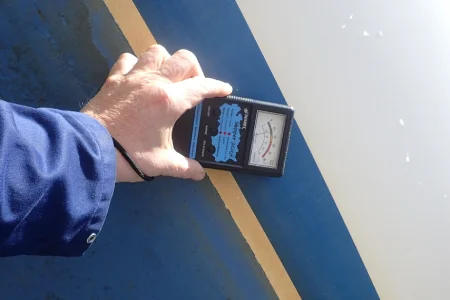
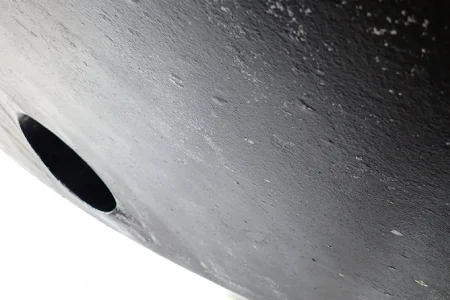
Many modern yacht are constructed from fibreglass GRP (Glass Reinforced Plastic). During the construction, some impurities or small air gaps and remaining unharden chemicals may remain. This can stay undetected for many years or react sudden. It is when water enters the laminate that a chemical reaction takes place and the waters that gets in, remain stuck. An accumulation of this trapped fluid forms a bull and created blisters into the outside layer, the gelcoat. When this process of osmosis and hydrolysis continues, we get in the stage of delamination and a serious danger for the structural integrity of the vessel of yacht. An increased moisture is not by definition an immediately danger situation but by many years of experience we know that a higher moisture is an increased risk for osmosis and delamination. Just put a moisture meter is not enough to judge osmosis. It requires experience to detect and evaluate if the problem is serious or just local. A full treatment for osmosis can for some yacht exceed the sale value.
How are fees calculated?
Charges depend on factors such as vessel type, dimensions, location and the scope of work involved. A clear quotation is issued in advance so clients know the anticipated cost. Commissioning a professional survey can prevent significantly greater expense by identifying issues early or supplying robust evidence in the event of a dispute.
For certain (frequent) items we have standard (fixed) fees based on the required survey. Other survey fees are based on time, complexity and eventual extra cost. (Time and trouble)
Are valuations just digits? And what to ask for a valuation?
A good appraisor / valuer shall make a throughout investigation of the ship – yacht or object that need to be valued. The original purchase, the maintenance and repairs made are evaluated.
This is the technical value.
A second important part is the value that is given under certain circumstances and for different purpose. Is a object very common the value when selling shall be close. Is an object very rare and special then it can attract many buyers or almost none. For commercially used ships and objects the possible earnings for the ship or object are important for the value.
This is the value corrected for the purpose and earning possibilities with it.
Beside technical and purpose value the place where the object is located and the area it can be sold have an influence on the effective price a seller can realise. The need and reputation and other factor are geographical influenced. A given value by a valuer shall therefore often been connected with a sales area.
This value taking into account the possibilities that are related to certain area.
The last but not least important factor is the time the sale is desired to be released.
A quick sale under pression or an auction shall have a different outcome. Based on experiences a valuer can make an estimation of this effect on the value. Also the efforts that are made to sale influence the final outcome.
This is the time pressure factor on the value.